Showing posts with label garden. Show all posts

Monday, September 6, 2021

The Road to Kona


I made the recommended stop at the Punaluu Bakery in Naalehu, famed for their Hawaiian Bread. I bought a couple of Malasadas (think dough bombs liberally coated with sugar) and coffee for breakfast. 

I should have listened to the counter girl when she told me they make all their baked goods with whole milk (“It’s what makes them soft”). Not a happy tummy down the road.


south coast parking solution


Determined to find one beach where I could access the water without shredding my sandals and feet (beaches here have a lava rock barrier of several feet out into the water), I turned down a few roads to the coast, only to find no parking at the smaller beaches.


Frustrated, I decided to go to church.
St. Benedict Roman Catholic Church in Honaounau is on the National Register of Historic Places. Known as “The Painted Church”, it was built between 1899 and 1904 by the Belgian Priest John Veighe. Since he spoke no Hawaiian, he built a miniature Gothic cathedral, painting the interior walls and ceiling himself as a teaching tool until he could learn the language to preach. 

The congregation, made up of families in economic transition, could relate to St. Benedict, a sort of “all-purpose” saint, patron to poison victims, agricultural workers, civil engineers, the dying, those afflicted with fever, those with gall stones, those with inflammatory diseases, those with kidney disease, members of religious orders, monks, schoolchildren, and spelunkers (cave explorers).

It's a pretty little church, easily explored in a few minutes. 

Joe's farm manager and tour guide  

A little way down Painted Church Road is Joe’s Macadamia Farm, big macadamias at better-than-store prices and a free tour on request.
While your arteries harden at Punalu'u bakery, you can enjoy the gorgeous garden

I got a text that my stay in Kona was ready, so I made my way to the aptly named Surf Hideaway

Wednesday, February 12, 2020

It's Magnolia Time Again!

The 55-acre San Francisco Botanical Garden in Golden Gate Park is just starting to burst into bloom with a variety of magnolia trees that delight the senses.  Every year at this time, the garden publishes a map so visitors can follow a walking tour through the various "rooms" in the well-laid out garden acreage, on the look-out (or more like "look-up") for the white or pink blooms - some the size of dinner plates. But magnolias are only one of the charms of this plant-fest. A few favorites: the succulent garden, which is ablaze with red-hot pokers, the redwood grove for the cool peace of giant sequoias, and the little ancient plant walk near the north entrance. Entry is free for San Francisco residents; for non-residents, single entry is $6-12. If you're thinking you might like a place to walk and unwind during the workday though, consider membership: individual membership is $70 a year, allowing free entrance any time to both the botanical garden and the park's fabulous Conservatory of Flowers, the oldest building in the park, a Victorian wedding cake filled with exotic orchids and tropical plants - a great place to warm up on a chilly day. 
If greenery is your thing, there's plenty of free plantings around the park, in bloom every season of the year. And it's almost time for the ornate tulip plantings to spring up around the windmills on the west side of the park!


Thursday, November 21, 2019

A Perfect Day in a Perfect Place: Balboa Park

Cymbidiums abound in Balboa Park's pleasantly shaded plant house

Land was set aside in 1868 by San Diego civic leaders for what was then called "City Park." The sandy, scrub-covered mesa that overlooked present-day downtown San Diego sat without formal landscaping or development for more than 20 years. It was renamed for Spanish explorer Vasco Núñez de Balboa in honor of the 1915 Panama-California Exposition, held in the Park that year. Today Balboa Park's total land parcel is 1,200 acres, and is one of the city's major destinations for locals and tourists.

1915 Exposition PosterThe 1915-16 Panama-California Exposition commemorated the opening of the Panama Canal and provided a major impetus for the creation of the Park as it appears today—it was the first of two major Expositions that created many of the cultural institutions as well as the stunning architecture in Balboa Park. The San Diego Zoo was established in 1916, the second year of this exposition.


Most of the arts organizations along Balboa Park's famous colonnaded El Prado pedestrian walkway -including a popular restaurant with outdoor seating, The Prado - are housed in Spanish-Renaissance style buildings constructed for the 1915 Exposition. It was one of the first times that this distinctive, flamboyant architectural style had ever been used in the United States. The park features numerous cafes and restaurants for all budgets and tastes.

The Park also features a large lattice-style botanical building and lily pond for exotic plants and the Alcazar Garden set in a fantastical building straight from Arabian Spain, an Art Museum (one of 17 museums and collections) and frequent cultural events. A visitor could easily spend more than one day wandering about.

Balboa Park was declared a National Historic Landmark, and a National Historic Landmark District in 1977.


Thursday, April 11, 2019

Off to the Sun: I am Amazed; A Magical Night in the Garden

Image courtesy of Desert Botanical Garden
Chihuly glass "cactus" at the entrance to DBG
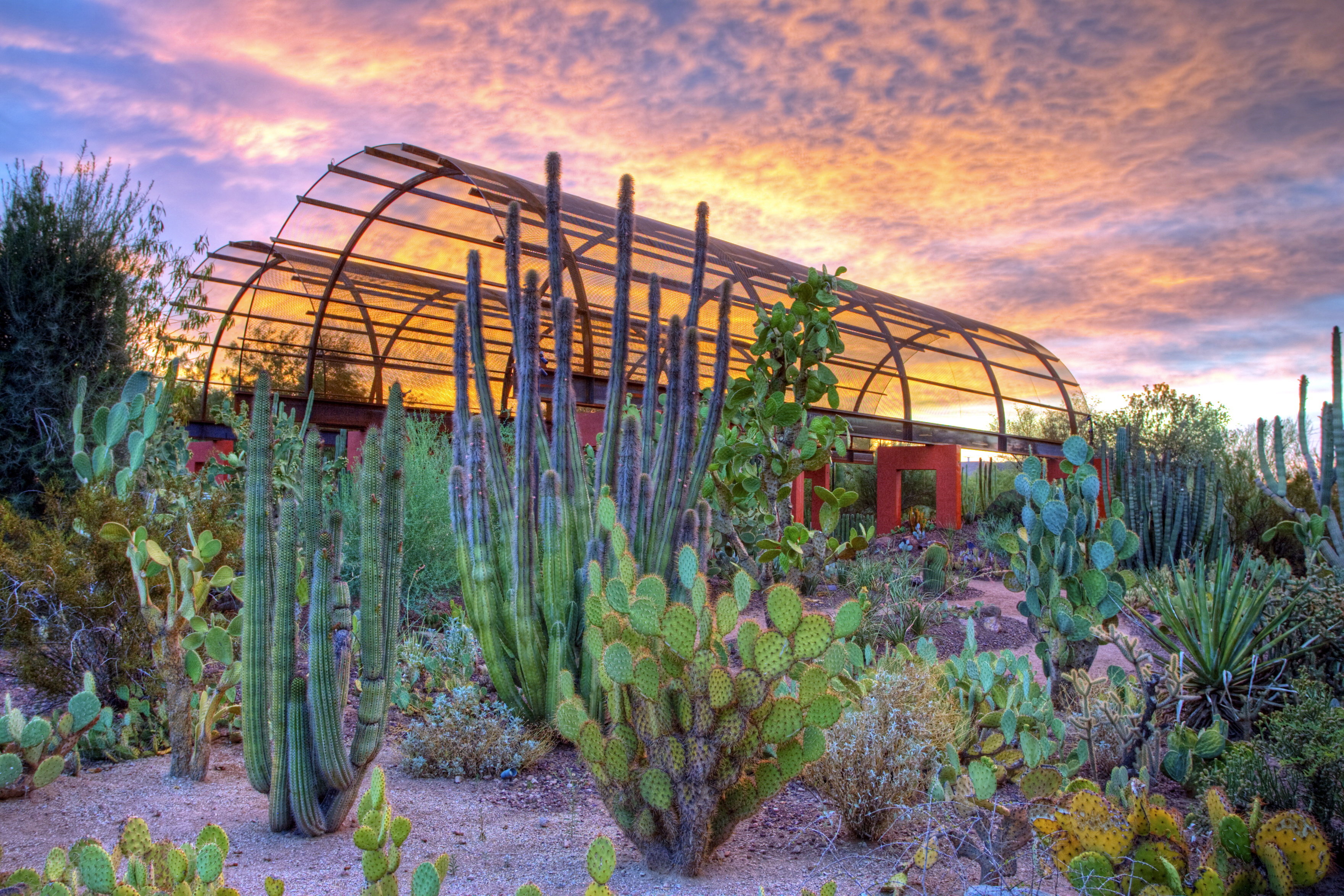
 On this, my second trip to the Desert Botanical Garden (DBG) in Scottsdale, I was expecting something WAY out of the ordinary - and I surely was not disappointed. The garden is always fantastic - 55 acres of carefully planned and beautifully maintained plantings that bring together the best of the southwest. The succulents, cacti and exotics that thrive in the relentless sun of desert climates are combined into an art form here. If you think deserts are nothing but sand and scrub, the DBG will change your perspective forever. It's the place that made me appreciate the stark beauty of a single cactus against a rainbow sunset.

But tonight was special. We had come to see Electric Desert. The Klip Collective, a group of video and sound artists from Philadelphia put together their first garden "show", Nightscape, at Longwood Gardens in Pennsylvania - that alone was enough to make me want to see what they had done at DBG. I had visited Longwood a number of times for my books on Pennsylvania (the original editions of Pennsylvania Handbook, Moon Travel/Avalon Publishing). As DBG is to the desert, Longwood is to the lush deciduous greenery of the mid-Atlantic. I was prepared to be impressed, and it was magical.
Image courtesy of DBG


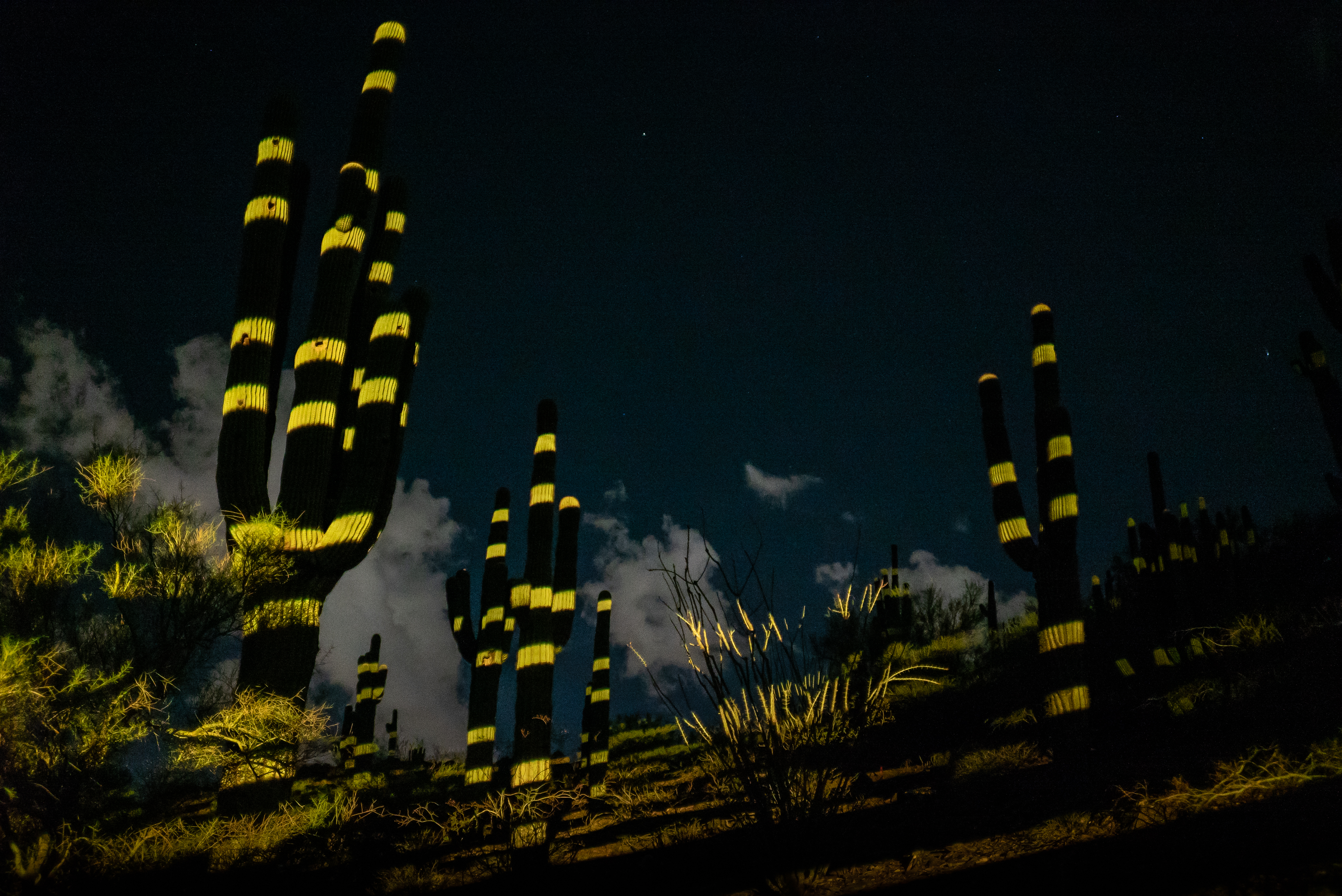
Bands of light played across saguaro cactus and tall trees, swirling into patterns and colors, accompanied by a tinkling, thrumming trance-inducing sound track. 


Image courtesy of DBG

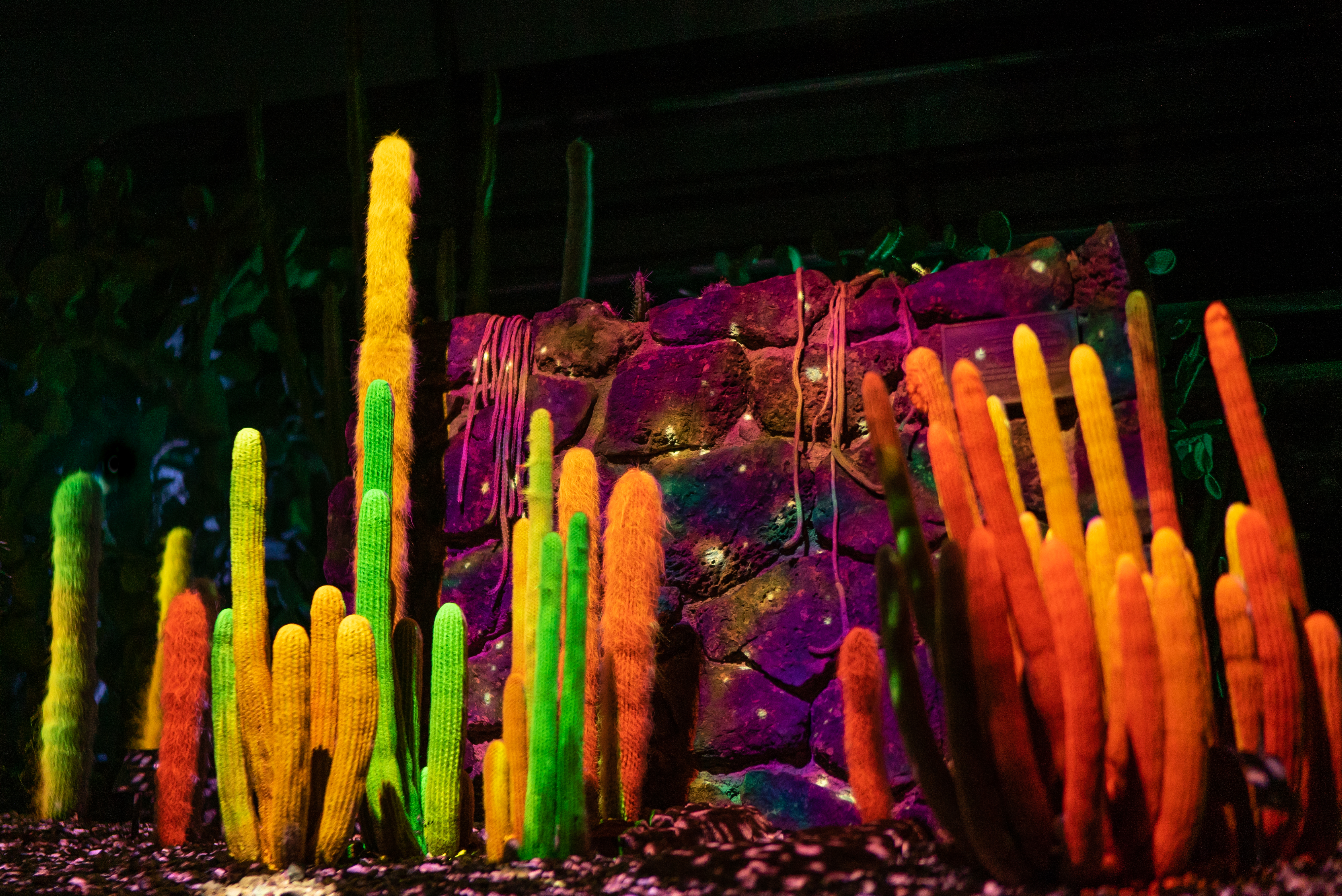
The path that winds through the garden opened into different "rooms", each with its own unique style of color and lighting. Still photos, though beautiful, don't capture the sounds and movement of the installation. To get a glimpse of the DBG installation, check out this video.


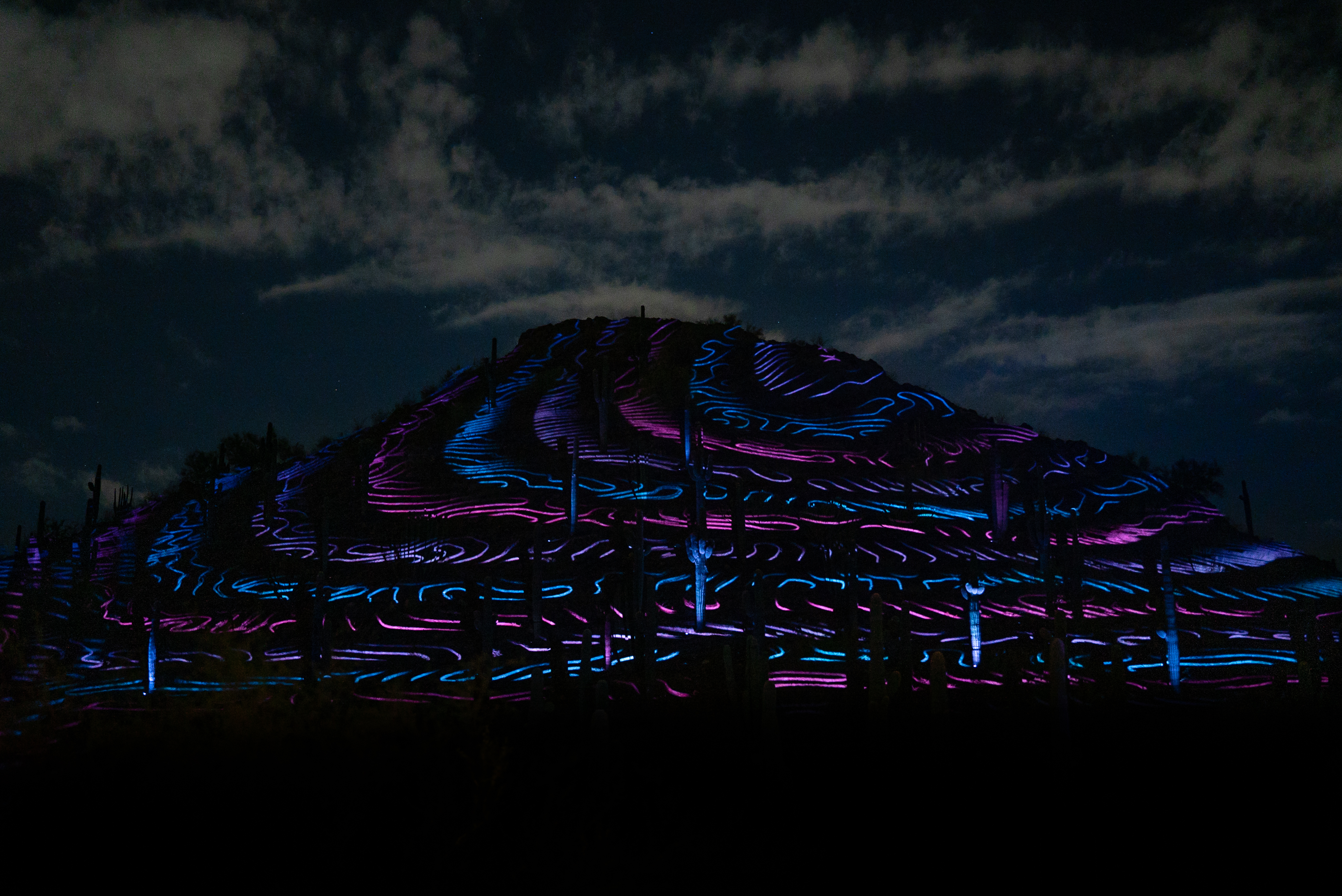
 The coup-de-grace was the mountain behind the gardens, lit with dancing patterns; lights shot upward like towers set in the mountain itself, making it look as though the entire mountain was about to lift off...I don't know how they did it, but it was mesmerizing, beyond fantastic. Check out the video here. And since you've been especially good, and because Klip is generously making their work available for everyone to see on Vimeo, here's another video of DBG from them. If you have a chance, see it in person on a warm summer night in Scottsdale, or follow Klip Collective to their next triumph.
Image courtesy of DBG

Wednesday, April 10, 2019

Off to the Sun: a Day of Art in Scottsdale

Scottsdale Museum of Contemporary Art  (SMOCA) Moon viewing installation


 Thank goodness for friends in far-flung places. When the dampness in Northern California results in a fine layer of mold on things that should never see spores (and it has been one rainy winter!), my thoughts stray to sunnier climes and my good friends who are smart enough to live there. And who are willing to put up with me for a few days...

First stop on this trip: Michele, who lives just outside Florence, AZ, midway between Greater Phoenix and Tucson. Florence is one of the oldest towns in Arizona, a typical dusty desert town, I always thought it didn't have a lot to recommend it; but on this trip I learned how wrong I was (more on that in a later blog).

Michele picked me up at PHX (also known as Sky Harbor), and we hit the ground running. Or rather riding. Scottsdale is one of several smaller cities that has been encompassed by Greater Phoenix, but retains a distinctive identity, and one of the coolest things about Scottsdale is the free trolley that buzzes around Old Town, where a lot of the museums, galleries and shopping extravaganzas mix with dozens of restaurants and cafes. It runs every 15 minutes, and yes folks, it's free. So we parked and picked it up, taking in the big art pieces that dot the landscape


Our appetites whetted for more visual candy, we hopped off the trolley  and walked a couple blocks to Scottsdale Museum of Contemporary Art (better known as SMOCA), currently celebrating its 20th anniversary with a series of world-class videos.


The museum is a success story in every way. Resurrected from an abandoned, run-down warehouse, the space is gorgeous. Sleek modern architecture surrounded by sensitive desert plantings abound in Scottsdale, and this is another fine example. The high ceilings make for vast installations that wouldn't look right anywhere else.

I've never been to a museum where the docents (who look nothing like the typical idea of a docent, by the way) are so enthusiastic about the art, they can't help but share their excitement about the artworks and the artists behind them - definitely an education in contemporary art.


The objects in this picture may look like giant pushpins, but they're actually chairs that rock from side to side - a little disorienting at first, but then, it's a party!

After our contemporary art tour, we drove down to the Desert Botanical Garden in Scottsdale for a truly magical experience.


All images by Joanne Orion Miller unless otherwise noted.

Monday, February 6, 2017

An Oasis of Bloom: San Francisco Botanical Garden

Golden Gate Park is an achievement, as everyone will agree. One of its many treasures is the cleverly laid-out 55-acre San Francisco Botanical Garden, which contains continents within its narrow boundaries.

On February 3rd, 2017, the public television channel KQED held a special day for members to come and preview the nearly 100 magnificent magnolia tree varieties normally in bloom this time of year. When the Botanical Garden opened in 1940, its exotic cup-and-saucer magnolia was the first of its kind in the Unted States--it drew crowds of visitors--and it's still in the garden today.


However, as everyone in northern California knows, after years of drought, the winter of 2016 was the rainiest on record for over 200 years! The result: the gigantic pink, purple and white lemon-scented blossoms on the trees bloomed two-to-three weeks ahead of schedule, leaving us visitors to content ourselves with fiery rhododendrons, luscious camellias and the hundreds of other amazing plants the master gardeners at the botanical garden have managed to coax from the sandy soil. Here are just a few:

A superb succulent garden
The redwood grove is a personal favorite

You can sign up for the Botanical Garden's e-newsletter on their website to be informed about what's in bloom and when.

Upcoming: wild flowers are in bloom April through June, and pianists play to entertain among the plantings in the July "Flower Piano" event. The garden is free to San Francisco residents, and $8 for adults. Special events and tours require an extra fee.

Thursday, November 10, 2016

A Really (Really!) Short Trip to Phoenix

These are glass Dale Chihuly "cacti"
Journeyed out on a brief trip to visit my friend who moved to Phoenix recently, and her dentist. I meet with and approve all my friends' service providers. No, I really was visiting her dentist because some expensive procedures cost about 1/3 less there than in the Bay Area--and that includes two round-trip flights! The main drawback is the Phoenix airport; due to runway rebuilding, three of my four flights were delayed between one and three hours. Flight personnel clued me to the best terminal to hang out in (if you HAVE to): Southwest Airlines (Terminal 4)--better restaurants, art etc. If you're going there, fly as early as possible in the morning.

We were able to do a little sight-seeing during my visit; unfortunately being outside for more than 10 minutes during the day is not something sane people do there (unless completely submerged in cold water), so the Casa Grande Ruins National Monument was saved for another day. We toured the tiny town of Florence--its few western-style streets looked like a cowboy movie set deserted in mid-day--and visited its well-stocked second-hand store that had some real treasures.
Outdoor dining at Gertrude's

Then it was up to the city of Phoenix, and the Desert Botanical Garden, which proved to be a fantastic find. Surrounded by hills resembling melted chocolate ice cream, the garden itself is beautifully lit and laid out (it was late in the afternoon by then, and the temperature had dropped to a reasonable 85 degrees). Our companion pooch melted the hearts of the attendants, but alas, no dogs allowed.
Since my flight continued to be delayed, we ended up spending a couple of hours at the restaurant in the garden. Gertrude's has an upscale seasonal menu and mixed drinks that are made from local ingredients and reflect the sunset in their beauty (my vote for best: Tombstone Tea, made with vodka, gin, triple sec, prickly pear nectar and lime syrup).

My favorite bite was the smoked and fried tofu appetizer with tomato kasaundi (a tomato-based dip) and curry salt--it was the chef's grandmother's recipe, modified by her Canadian upbringing and time in New Orleans. Our waiter, Kent, was a doll, especially given the amount of time we dawdled nursing our drinks and waiting for news from the airline. Jared, the bartender, was kind enough to let us taste his favorite (California) wine.

Next time--hopefully in winter, when the air temperature will drop down to the 70s, there's plenty I'd like to see in the Phoenix area beyond Casa Grande: Frank Lloyd Wright's Taliesin West in Scottsdale, the Boyce Thompson Arboretum State Park, the Painted Rock Petroglyphs...
Chihuly cacti at night
I'm just getting started! I better need more dental work soon...

Wednesday, May 8, 2013

Amsterdam Weds. May 8 - the Amazing Keukenhof Gardens


Another view of Keukenhof Gardens
In order to stay awake and make the best use of my time, I arrived at the airport and, after a breakfast of an awesome caramel cookie and a soggy undercooked piece of apple cake with good coffee, planned to go directly to Keukenhof Gardens. I’m still a little amazed that the incredibly busy Amsterdam Airport actually has luggage storage in these days of terrorism, but was plenty grateful to not have to lug around my suitcase and backpack. I struggled with the baggage lockers for half an hour before I figured out that American credit cards don’t always come with a pin code—mine didn’t (though it’s possible to get one), and the baggage lockers don't operate on cash. So I ended up walking to the opposite end of the airport to take my luggage to a physical luggage check in the basement. Seven euros (about $9) for 24 hours—it beats rotator cuff injuries any day.
More Keukenhof eye candy

The Dutch are so friendly and eager to help a stranger--EVERYONE went out of their way, up to and including the nice man who showed me how to work the rather confusing ticket system for the train and Metro, explaining, “I understand you, but I don’t speak much English”. I learned pretty quickly that there are the trains—like the one that runs from the airport to other cities and the outskirts of Amsterdam—and the Metro system, that includes the subway system, trams and buses, and functions inside the city and its suburbs. Tickets will work for one or the other, but not both. I had pre-bought a ticket to Keukenhof Gardens and that included a bus from the airport. The gardens are only open from mid-April to May 20 each year.

Keukenhof was grand; it may be the most outstanding formal planting I’ve ever seen. The garden area itself covers many acres, well-kept (not one dead flower—not ONE—in literally millions of blooms). The color combinations, the multiple garden “rooms” with different types of tulips intermixed, fountains, and an outstanding orchid house were superb; themes included a Japanse garden, windmill, and a display honoring British gardens that was in the process of being built, among others. 


In the Orchid House
Keukenhof exceeded my expectations; I wandered around for four hours and revisited my favorites—a fantastic must-see for those who love gardens, and of course, tulips.

And of course, I had a herring sandwich for lunch in the excellent little cafe there.

To be overwhelmed by color, tulips, and the ingenuity of the Dutch, go to the album "Keukenhof" on my Pinterest page, here. I will upload a video (featuring Keukenhof's working windmill and player organ) in June.


I hoped to see flower fields, and they were visible from the upper level of the windmill, across a small canal: row upon row of glowing red, yellow, white and purple under the calm grey sky.


See more pics of the Keukenhof gardens on my travel website gallery page: aboutJoanneMiller.com


Walking on water? Nope - a clever water feature: 


Less than an inch below the surface, these "lily pads" allow visitors to follow a path through the pond